ESMOD's curriculum, cultivated over its long history, is a globally common foundation, and we offer education that blends the culture and know-how of each country and school. By sharing information on global fashion trends and the latest methods at regular international conferences, we contribute to innovative and contemporary education. Students not only take classes in a foreign language, but also gain exposure to new values through short-term study abroad programs between ESMOD schools around the world.
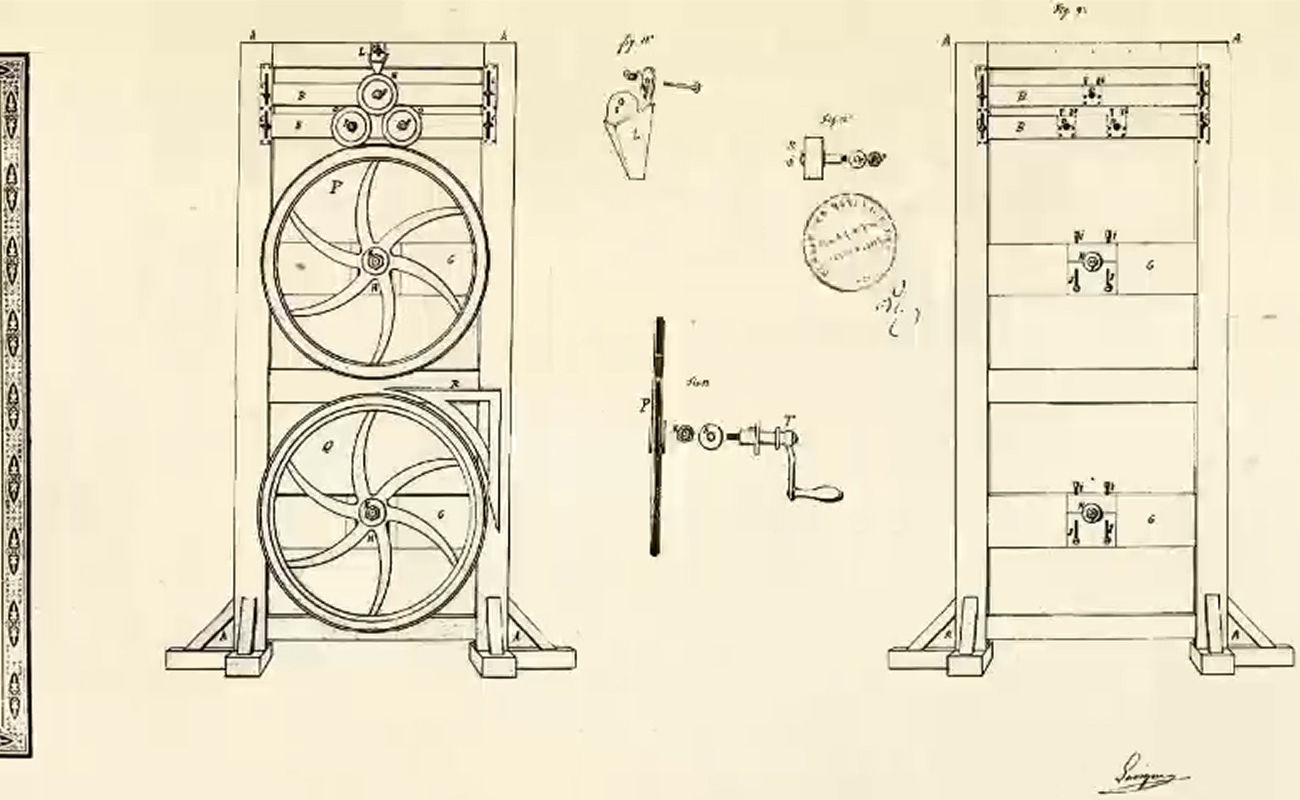
In the 19th century, Alexis Lavigne, the court dressmaker of Napoleon III, founded the world's first specialized fashion educational institution in Paris, France. This marked the beginning of ESMOD.
He was the inventor of the world's first mannequin and tape measure, and an innovator who revolutionized fashion by theorizing flat cutting, ushering in an industrial revolution.
More than 180 years later, his legacy and innovative spirit continue to be passed down through ESMOD in 12 countries around the world.
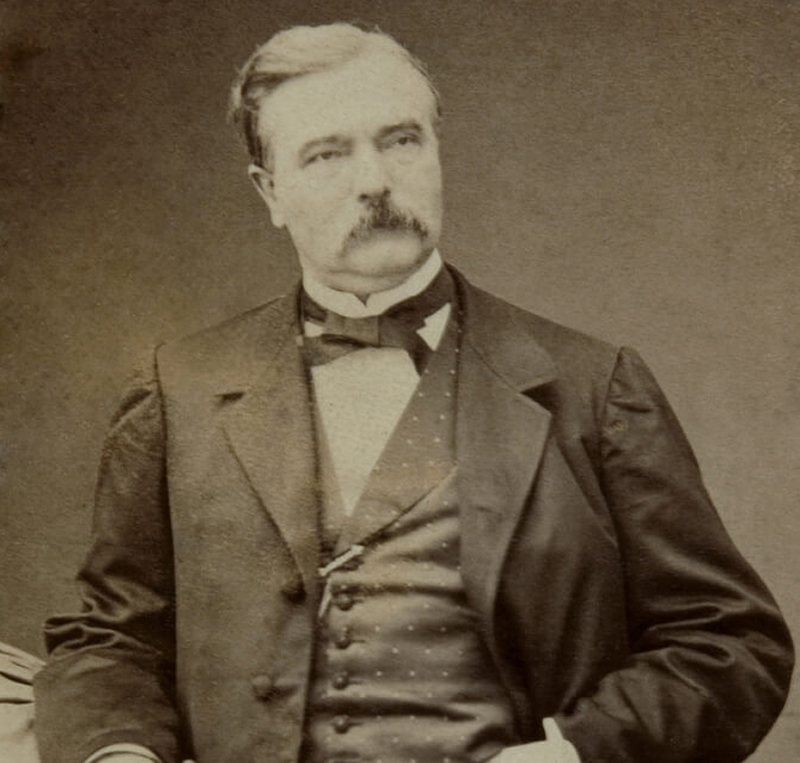
In 1841, during the French Second Republic (1848-1852) (1852-1870), Alexis Lavigne, the court dressmaker to Napoleon III, founded the world's first specialized fashion education institution on the Rue de Fontaine in Paris. This marked the beginning of ESMOD.
Alexis Lavigne was also an inventor, devising the world's first mannequin and tape measure, tools still essential to the fashion industry today. He also developed a method for logically cutting flat garments for both men's and women's clothing, and published an educational book that marked the first step toward systematic training for young tailors and couturiers, whose only option at the time was to learn the skills through apprenticeship. He then founded a school to impart his unique know-how, becoming an innovator who ushered in the industrialization of fashion, which had previously been the preserve of artisanal tailoring and the domain of the upper class.

The school founded by Alexis Lavigne was passed down to his daughter, Alice Gale-Lavigne, in 1885 and began training women under the name "Gale-Lavigne School". Her contributions to fashion culture have earned her awards from her native France and other European countries.
In 1970, ESMOD, passed down through generations of Berthe Leconte-Gale and Jean Leconte-Gale, introduced a curriculum for training ready-to-wear creators, shifting from its previous focus on haute couture. Renamed ESMOD, the school offered innovative and professional education to meet the needs of the times, and has produced a succession of world-renowned designers and creators, including Thierry Mugler, Eric Bergère, and Franck Sorbier.

In the 1980s, the fashion industry began incorporating concepts and theories into marketing. To respond to these changes and new demands in the industry, ESMOD established ISEM (now ESMOD Fashion Business) in 1989, a business school specializing in fashion. Since then, the school has focused on training talent aspiring to become managers in marketing and communications teams.
ESMOD's curriculum, which not only teaches fashion design but also business, broadens the range of careers available to students, allowing ESMOD graduates to pursue careers in a variety of fields beyond designers and pattern makers.

Fashion BusinessIn 1984, Satoru Nino, current president of ESMOD International, established the first ESMOD school outside of France in Harajuku, Tokyo.
Implementing the curriculum of the Paris school, French instructors and active professionals are dedicated to developing talent. The school is highly regarded in the fashion industry for its high employment rate at collection brands and major companies, as well as the large number of graduates who have launched and succeeded in their own brands.
With the opportunity to study abroad at the Paris school from the Tokyo school, many graduates have gone on to work for French haute couture and luxury brands. In addition, the Tokyo campus has partnered with CNAM (French National Conservatoire des Arts et Métiers des Arts et Métiers) to offer a course specializing in Innovation Management. Students completing this course will receive an International Bachelor's degree.

The establishment of the Tokyo campus marked the start of globalization, and the ESMOD Group's network has now expanded to 18 schools in 12 countries around the world. Each school, with its own unique cultural and industrial background, holds an annual international group conference to review educational policies and outcomes.
The group continues to evolve and evolve by sharing its educational experiences, cross-cultural exchanges, and information on market changes and industrial conditions.
With the development of cutting-edge digital technology and AI, many current jobs will disappear, and it is said that by 2030, 85% of these jobs will have been replaced by new jobs that do not exist today.
To respond to these changes, ESMOD will inherit the innovative spirit of founder Alexis Lavigne and develop educational content that incorporates new technologies.

ESMOD is highly regarded in the industry for honing its presentation skills and outstanding technical abilities to accurately express one's thoughts, and graduates find employment as designers and pattern makers at major companies and creative companies.
In addition, many graduates are active not only in Japan but also in luxury brands overseas, including in France.
This shows that ESMOD's professional education is highly regarded in the global fashion industry.