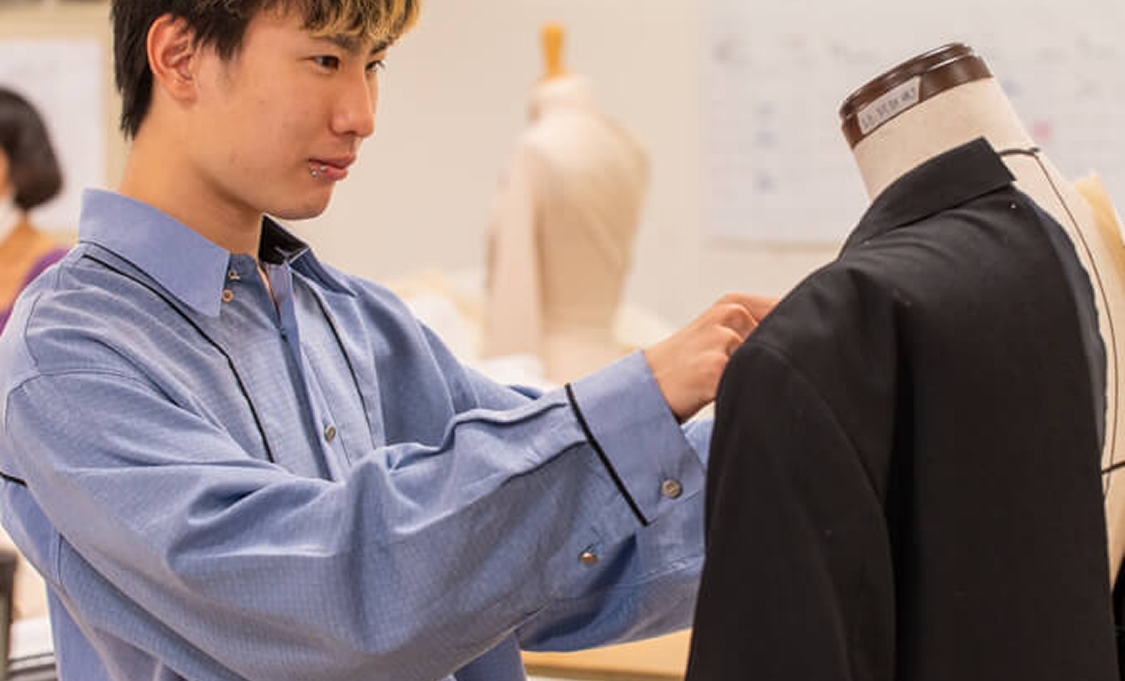
This intensive course is aimed at those with basic fashion knowledge and experience through specialized education or work. Students will learn the contents of the three-year General Course in two years.
In their first year, students will take a condensed program of the first and second years of the General Course, and then transfer to the third year of the General Course in their second year. Aiming to become professionals in two years, the courses will be more practical and theoretical, providing a high-level approach.
High school graduates (including prospective graduates) or those deemed to be at an equivalent level, as well as those currently enrolled, university or vocational school students, and working adults who have already acquired basic fashion knowledge in a similar institution or in the real world.
Completion of ESMOD's Saturday Course (double enrollment)
2-Year Course
April
30 weeks per year, Monday-Friday, 9:00 AM - 6:00 PM
Admission Fee: ¥300,000 Tuition: ¥1,380,000 Insurance fee: ¥12,000
Japanese
Tokyo Campus
Self-promotion essay, interview, self-expression work, and practical exam are evaluated.
International students are subject to certain requirements regarding residence status and Japanese language proficiency (see "International Students" for details).
The sensibility, knowledge, and skills cultivated in the first and second years of the Comprehensive Course will be cultivated in one year. This degree is awarded to those who have completed the course.
In Stylism, you will learn the entire fashion design process, from reviewing the basics of design drawing to researching all items and brand planning.
In Modelism, you will comprehensively master structural theory, flat drafting, and draping for items ranging from light to heavily lined garments.
First-year students will present their work in a fashion show alongside first- and second-year students in the General Course.
Third-year students will transfer to the General Course or English Course and create their own collections as a brand in their respective fields.
After a presentation is judged by fashion industry experts, including businesspeople and designers, the collections will be presented as a graduation collection and fashion show.
In addition, students will create a commercial line based on the theme of their graduation collection. This comprehensive learning, designed to prepare students for a wide range of careers in the industry, will foster the mindset of a professional who can immediately contribute to the industry.
At an on-campus job interview, students present their portfolios and work tailored to the brands they are applying to. This interview often leads to job offers.
For the graduation collection, students are responsible for everything from arranging the venue and models to creating and directing the show, and even managing the day itself.
This allows students to experience the process of planning and presenting an actual fashion show held by a brand.